 Glamour Salon Barber Shop LLC
Exploring How Dye Affects Various Types of Hair
Hair dye has been a popular choice for many who seek to change their appearance. Understanding how different hair types react to this process is essential. Each hair type, whether straight, wavy, curly, or coily, interacts uniquely with dyes. This article will delve into the nuances of these interactions and provide insights into achieving optimal results when coloring your hair.

Impact on Straight Hair
Straight hair typically absorbs color more evenly due to its uniform surface. When using hair coloring products, it’s crucial to consider the porosity of straight hair. Lower porosity often leads to longer processing times because the cuticles are tightly packed. Thus, the application requires patience and precision for desired outcomes.
Effects on Wavy Hair
Wavy hair presents an interesting challenge as it may exhibit characteristics of both straight and curly textures. Using hair coloring techniques that cater to this dual nature can enhance natural waves while adding depth. It’s advisable to use semi-permanent dyes initially to understand how your specific wave pattern responds before committing to permanent solutions.
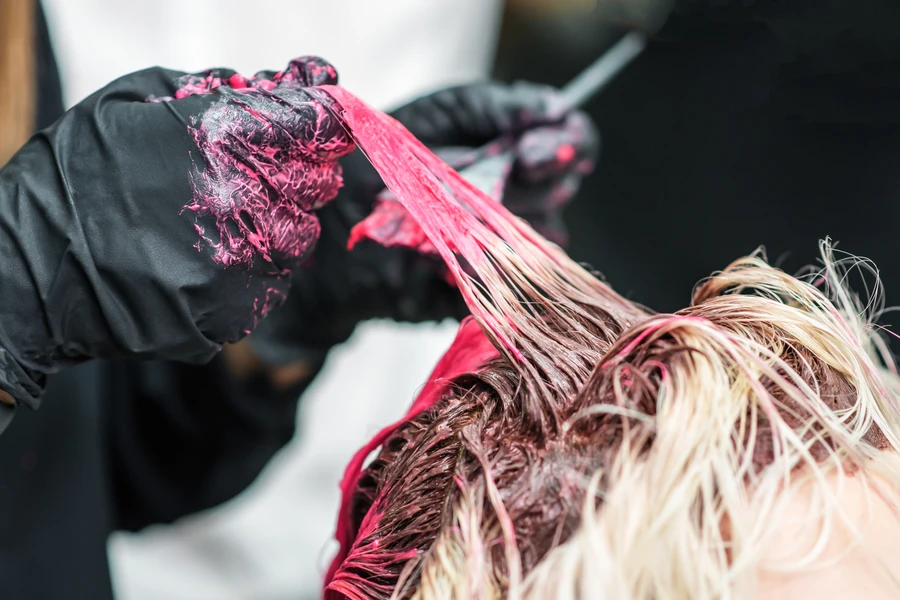
Understanding Curly Hair Dynamics
Curly hair tends to be more porous than straight or wavy hair. This means that it can absorb color quickly but also lose vibrancy faster. When applying hair coloring techniques, it’s vital to consider moisturizing treatments post-coloring. This ensures curls remain hydrated and retain their bounce and shine.
Caring for Coily Hair
Coily hair, known for its tight curl pattern, is fragile and needs special care during the dyeing process. The structure of coily hair makes it highly susceptible to damage if not handled correctly. Use low-manipulation techniques and gentle formulas designed specifically for textured hair to minimize risks associated with chemical processing.
Common Challenges in Hair Dyeing
Despite advancements in hair dye technology, several challenges remain prevalent across all hair textures:
- Uneven color absorption leading to patchy results
- Increased dryness and potential breakage
- Fading colors over time requiring frequent touch-ups
Applying best practices tailored to your hair texture can mitigate these issues significantly.
Steps for Optimal Results
If you’re planning to dye your hair, follow these steps for better outcomes:
- Identify your hair type (straight, wavy, curly, coily)
- Select appropriate dye products formulated for your texture
- Conduct a strand test to predict final color outcomes
- Use protective treatments pre- and post-dyeing
- Follow manufacturer instructions meticulously
These steps help ensure your hair maintains health and vitality through the process.
Best Practices for Maintaining Color
To maintain vibrant and healthy dyed hair:
- Avoid washing with hot water, which can strip color
- Use shampoos and conditioners designed for colored hair
- Incorporate deep conditioning treatments weekly
- Limit heat styling tools’ usage
- Regular trims prevent split ends from traveling up the shaft
Cost Considerations in Hair Coloring
The cost of hair coloring varies based on factors like salon choice and product quality. While professional services offer expertise, at-home kits are economical options. Weighing the pros and cons of each can help you decide what’s best suited for your budget.
Final Recommendations for Healthy Colored Hair
Achieving beautiful colored hair requires understanding your unique texture and following proper maintenance routines. For expert guidance tailored to your needs, contact Glamour Salon Barber Shop LLC at (919) 239-4082. Our team in Raleigh, NC offers specialized services ensuring your hair remains stunning and well-cared-for after coloring.